


October 26, 2026 | Categoría:
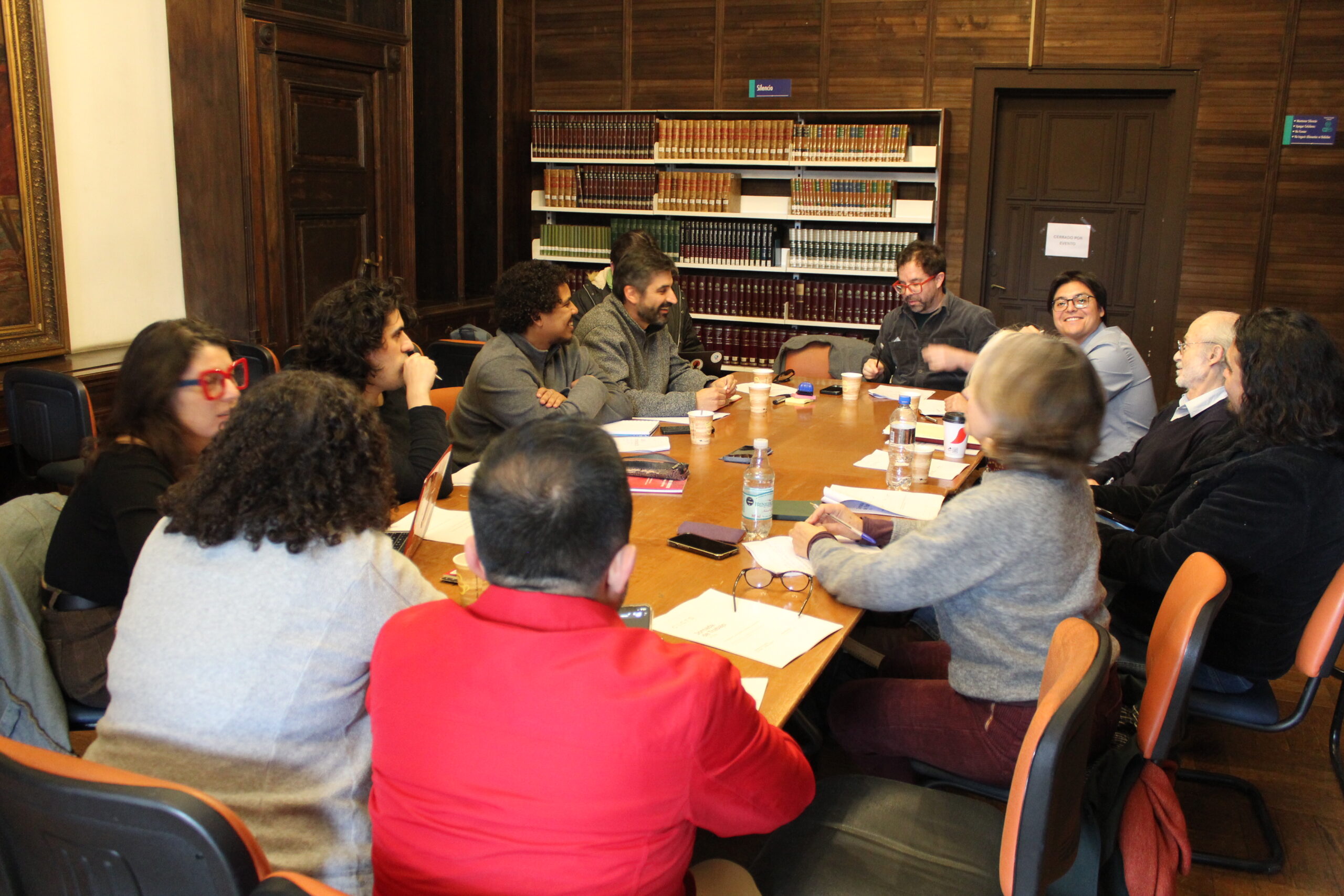
What might research on artificial intelligence, education, soils, cities, water and mining have in common? On October 9th, CECTS researchers came together to bring their ongoing work into conversation and explore new questions and possibilities for collaboration.
The meeting brought together members of the Centre for Science, Technology and Society Studies (CECTS) working across Anthropology, Engineering, Journalism, Psychology, Sociology, Social Work and other interdisciplinary fields.
Participants included Sebastián Ansaldo (Journalism), Cristóbal Bonelli (Sociology), Alejandro Castro (Social Work), Mitzi Duboy (Social Work), Kenneth Fowler (PhD in Sociology), Carolina Giraldo (Engineering), Francisca Márquez (Anthropology), Renato Moretti (Psychology), Claudio Ramos (Sociology), Francisco Salinas (Sociology), Cristián Olivares (Engineering), Nicolás Trujillo (Philosophy and Humanities) and Enrique Vázquez (Engineering).
The meeting began with a simple question: what happens when seemingly unrelated research projects listen to one another? Rather than defining a shared agenda in advance, participants presented their current work and collectively explored problems and questions capable of connecting it.
One of the clearest intersections emerged around artificial intelligence, platforms and new forms of decision-making. Research on generative AI and teachers’ work, learning, computational tools, normative alignment and platformisation converged around questions about how these technologies are transforming the ways we learn, evaluate, produce knowledge and make decisions.
A second connection emerged, quite literally, beneath the surface. Research on soil hydraulics and wildfires, salt flats, urban underground spaces, water, community monitoring and mining led to another shared question: how do we know, inhabit and intervene in what lies beneath our feet? The conversation brought together soils shaped by water, fire and ecological processes with urban underground spaces sealed by concrete, excavated and inhabited, as well as scientific, technical and community practices for making visible what happens beneath the surface.
These intersections are not new, fixed research lines. They are emerging questions that reflect one of CECTS's central ambitions: to create spaces where research from different disciplines can encounter one another and generate questions that would be difficult to formulate in isolation.
Throughout 2027, the Centre will continue this work through research meetings, discussions of work in progress, collaborative publications and the development of joint research proposals.
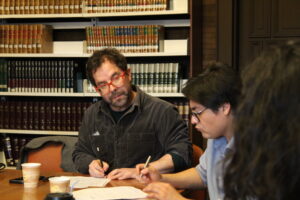
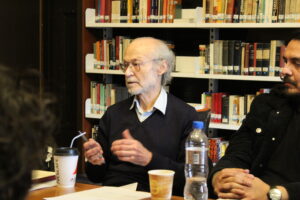
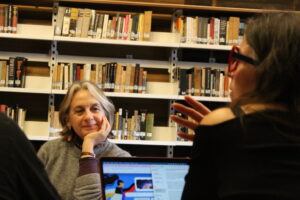
The meeting brought together members of the Centre for Science, Technology and Society Studies (CECTS) working across Anthropology, Engineering, Journalism, Psychology, Sociology, Social Work and other interdisciplinary fields.
Participants included Sebastián Ansaldo (Journalism), Cristóbal Bonelli (Sociology), Alejandro Castro (Social Work), Mitzi Duboy (Social Work), Kenneth Fowler (PhD in Sociology), Carolina Giraldo (Engineering), Francisca Márquez (Anthropology), Renato Moretti (Psychology), Claudio Ramos (Sociology), Francisco Salinas (Sociology), Cristián Olivares (Engineering), Nicolás Trujillo (Philosophy and Humanities) and Enrique Vázquez (Engineering).
The meeting began with a simple question: what happens when seemingly unrelated research projects listen to one another? Rather than defining a shared agenda in advance, participants presented their current work and collectively explored problems and questions capable of connecting it.
One of the clearest intersections emerged around artificial intelligence, platforms and new forms of decision-making. Research on generative AI and teachers’ work, learning, computational tools, normative alignment and platformisation converged around questions about how these technologies are transforming the ways we learn, evaluate, produce knowledge and make decisions.
A second connection emerged, quite literally, beneath the surface. Research on soil hydraulics and wildfires, salt flats, urban underground spaces, water, community monitoring and mining led to another shared question: how do we know, inhabit and intervene in what lies beneath our feet? The conversation brought together soils shaped by water, fire and ecological processes with urban underground spaces sealed by concrete, excavated and inhabited, as well as scientific, technical and community practices for making visible what happens beneath the surface.
These intersections are not new, fixed research lines. They are emerging questions that reflect one of CECTS's central ambitions: to create spaces where research from different disciplines can encounter one another and generate questions that would be difficult to formulate in isolation.
Throughout 2027, the Centre will continue this work through research meetings, discussions of work in progress, collaborative publications and the development of joint research proposals.