


October 26, 2026 | Categoría:
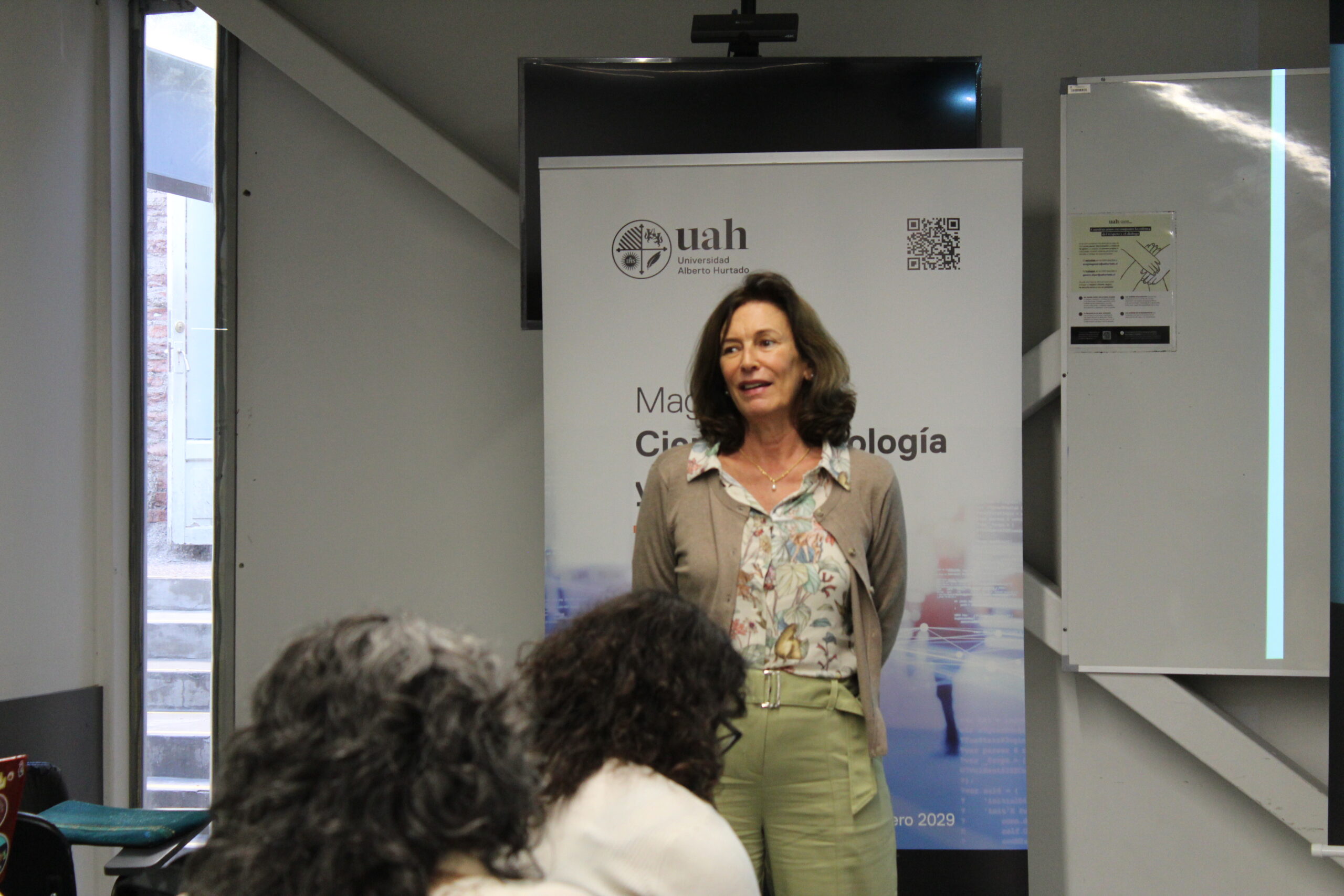
Noela Invernizzi delivered the closing commentary at the First STS Graduate Research Meetingorganised by CECTS and held from 21 to 23 October at Universidad Alberto Hurtado. Having opened the event with the lecture “Latin American STS in the Geopolitics of Knowledge”, Invernizzi offered a response to the body of research presented by master's and doctoral students, structured around the themes addressed, the theoretical frameworks mobilised and the methodological designs proposed.
In her review, Invernizzi identified five thematic clusters across the projects: knowledge production, territories and environmental justice; democratisation of science and technological appropriation; digital platforms, data and power relations; scientific production, materiality and technoscientific futures; and governmentality and the institutional production of subjects. In her view, the body of work addresses problems that are pertinent to Chile and shared across the region, opening up questions about the neutrality of technical categories, the unequal distribution of epistemic authority and the differing values that social groups attach to nature.
Among her observations, she noted that STS scholarship tends to treat democracy as a given concept, even though it is neither universal nor understood in the same way by the various actors involved in processes of public participation. She also encouraged close attention to the tendency to read technology as something external that produces impacts, particularly in studies of digital platforms, where the ubiquity of the digital and the economic power sustaining it push towards that kind of reading.
On theoretical frameworks, she valued the interdisciplinary effort and the commitment to working with situated objects. Building on this, she proposed hybridising these frameworks with Latin American scholarship and work from other peripheral settings, closer to the problems under study, and recovering research produced in Chile and the region as a starting point. She also suggested narrowing the frameworks adopted at the outset and allowing empirical evidence to bring new authors into the conversation, so that the data open up the theoretical discussion rather than the other way around.
On methodology, she acknowledged the ambition of several research designs alongside the limited timeframes in which a thesis is developed. She recommended delimiting research objects in order to protect time for analysis, and pointed to time management as one of the most demanding challenges of postgraduate training.
Invernizzi closed her remarks by highlighting the value of such gatherings as spaces to step out of the solitude of thesis writing and strengthen the transdisciplinary identity of the field. Doctoral schools, she noted, anticipate the research agendas of the years ahead.
With this first edition of the Meeting, CECTS seeks to open a space of support for those in the midst of writing their theses, recognising that the training of early-career researchers is integral to the development of the STS field in Chile.